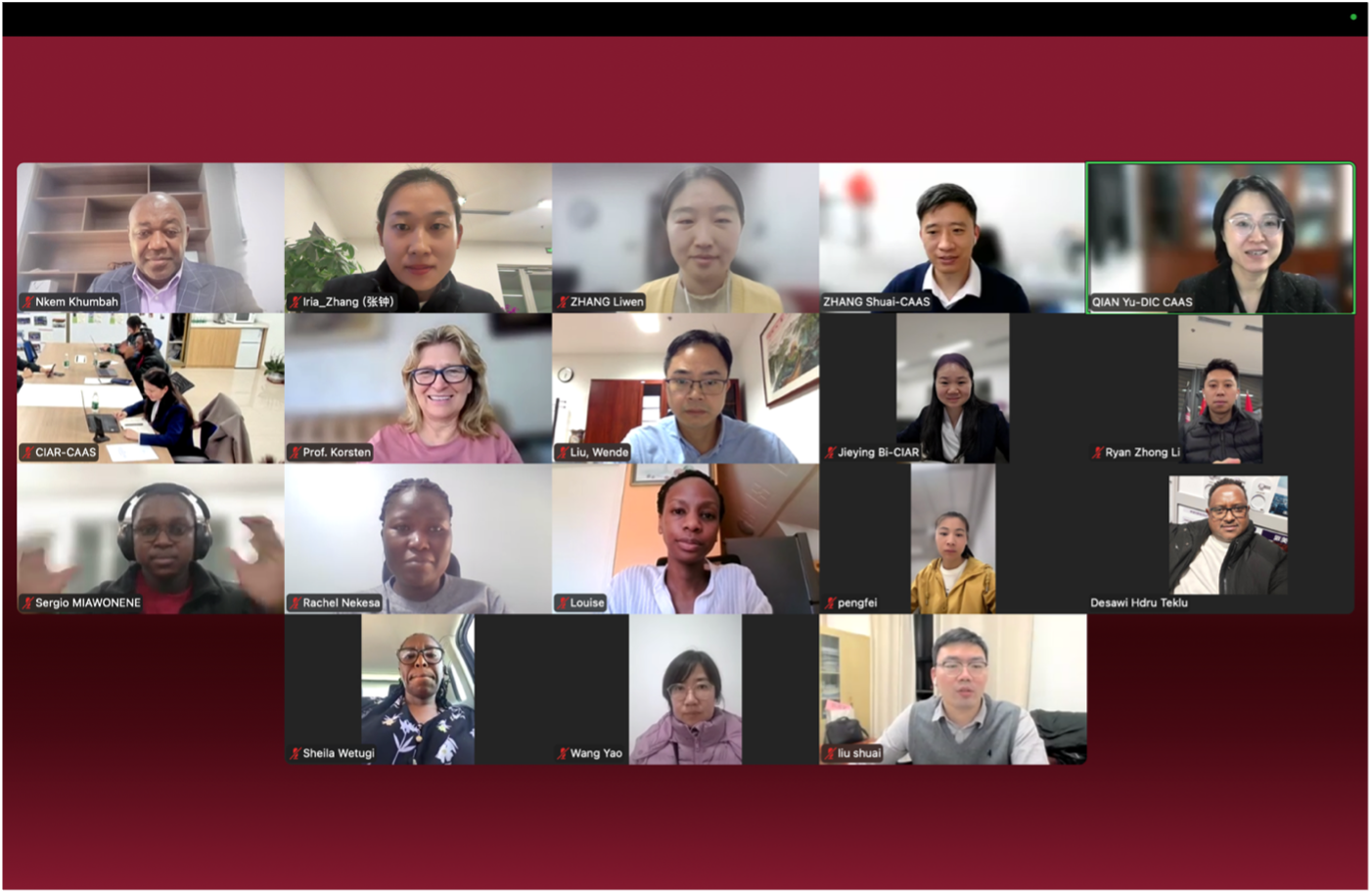





BEIJING and NAIROBI – January 15, 2026 – The Secretariat of the China–Africa Agricultural Science and Technology Innovation Alliance (CAASTIA) convened its first work meeting of the year via virtual conference, bringing together representatives from the Chinese Academy of Agricultural Sciences (CAAS) and the African Academy of Sciences (AAS). The meeting reviewed CAASTIA's achievements in 2025 and discussed key priorities and action plans for 2026.
The meeting was co-chaired by Qian Yu, Acting Director General, Department of International Cooperation of CAAS and Prof. Lise Korsten, President of AAS, who highlighted the steady progress made in 2025 and emphasized the importance of maintaining momentum as CAASTIA enters a new phase of implementation-oriented cooperation.
Reviewing 2025 Achievements
During the meeting, the Chinese Secretariat presented an overview of CAASTIA's major accomplishments in 2025, including the successful organization of the General Assembly, the establishment of the CAASTIA Secretariat framework, talent development initiatives, the launch of the CAASTIA logo and official communication channels, and strengthened institutional support from CAAS. These milestones laid a solid foundation for advancing Africa–China agricultural science and technology collaboration.
Key Priorities for the 2026 Action Plan
Participants engaged in in-depth discussions on the proposed 2026 Action Plan, focusing on governance, operational mechanisms, and programmatic expansion. Key priorities include convening the inaugural Board Meeting in mid-April 2026, strengthening coordination between the Chinese and African secretariats through regular meetings, securing sustainable funding to support implementation, and expanding staffing capacity to meet growing operational demands.
The meeting also underscored the importance of launching new collaborative projects, particularly in digital agriculture and smart agricultural machinery, to support food and nutrition security in Africa. In addition, continued implementation of the Scientific Talent Empowerment Program in Agriculture (STEP-A)—covering degree education, visiting scholars, postdoctoral research, and short-term technical training—was identified as a core pillar for capacity building.
Strengthening Africa–China Collaboration
The African Secretariat welcomed the progress made in 2025 and provided constructive recommendations for the year ahead. They emphasized the need to prioritize implementation effectiveness, focus on key African food security crops, specifically cassava and sweet potato, to enhance institutional mapping, enhance institutional mapping to facilitate scientist-to-scientist collaboration, and further strengthen outreach through upgraded digital platforms, including the CAASTIA official website and social media platforms.
Looking Ahead
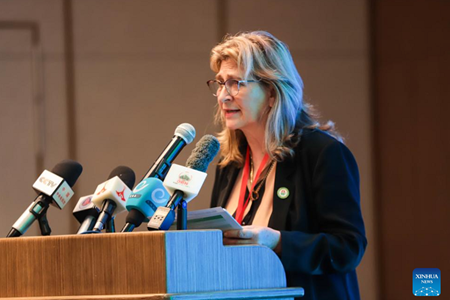
In her closing remarks, Prof. Lise Korsten, President of AAS, reaffirmed the strategic importance of agriculture in Africa–China cooperation and expressed confidence in CAASTIA’s future development. She noted that the Alliance represents a strong starting point for deeper collaboration and called for continued joint efforts to translate shared plans into tangible outcomes that benefit African food systems and agricultural innovation.